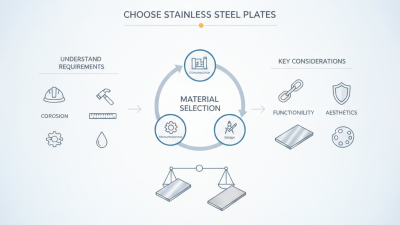
How to Choose the Best Stainless Steel Plates for Your Needs?
Choosing the right Stainless Steel Plates can be a daunting task. With so many options available, it’s easy to feel overwhelmed. Industry expert Dr. James Mercer, a leading metallurgist, states, “Selecting the right stainless steel is essential for durability and performance.”
When considering Stainless Steel Plates, think about your specific needs. Different grades have unique properties. For instance, 304 stainless steel resists oxidation and corrosion. If you need high strength, 316 might be more suitable. Understanding these distinctions is crucial.
Additionally, quality matters. Not all manufacturers provide the same level of craftsmanship. Seek reliable suppliers with proven track records. Customer reviews can offer insight into product performance. Ultimately, your choice will impact functionality and longevity. Choose wisely to ensure optimal results.
Understanding Different Types of Stainless Steel Plates Available
When selecting stainless steel plates, understanding the available types is crucial. Stainless steel plates come in various grades, each tailored for specific applications. The most common grades are 304 and 316. Grade 304 is versatile and resistant to rust. It works well in many environments. However, it may not withstand extreme conditions.
Grade 316 offers higher corrosion resistance. This grade is suitable for marine environments. It contains molybdenum, which improves its resilience. Consider your project's environment before making a choice. Think about the potential challenges that your plates might face.
Tips: Always check the thickness of the plates. A thicker plate can provide better durability for rugged use. Additionally, consider the finish—smooth finishes are easier to clean. Ensure the supplier has a good reputation. Reliable suppliers often provide material certifications. They can offer insights on best practices for maintenance and longevity. Remember to reflect on your specific needs. Sometimes, the cheapest option may not be the best choice.
Evaluating the Thickness and Size Requirements for Your Project
When selecting stainless steel plates, thickness and size are crucial. Both factors directly impact the plate's strength, durability, and suitability for your project. For instance, a thicker plate can withstand higher stress and is ideal for heavy-duty applications. Conversely, if weight is a concern, thinner options may be preferable.
Consider the requirements of your specific application. Plates for construction must provide structural integrity. Meanwhile, those for food service must meet health standards. Assessing the environment where the stainless steel will be used is essential. Will it be exposed to moisture or chemicals?
**Tips:**
1. Always check the gauge of the plate. A lower gauge indicates a thicker plate.
2. Measure the exact dimensions you need before purchasing; cutting stainless steel can be complex.
3. Remember that thicker plates can be more challenging to work with. This might require special tools.
Evaluate your needs closely to ensure you choose appropriately. Balancing thickness and size will lead to better outcomes in your projects.
Considering Corrosion Resistance and Finish Options
When choosing stainless steel plates, corrosion resistance is critical. Different grades of stainless steel offer varying levels of resistance to rust and other forms of corrosion. For instance, 304 stainless steel is commonly used for food applications. However, it may not withstand harsh environments like coastal areas. In these cases, consider 316 stainless steel, known for its superior resistance to saltwater.
The finish of stainless steel also influences its durability. A polished finish not only enhances appearance but can also provide better corrosion resistance. However, it may show fingerprints easily. Brushed finishes hide smudges better but may require more maintenance over time. The choice of finish can impact not just aesthetics but also the longevity of the plates. It's crucial to weigh these factors carefully.
Making a decision is not always straightforward. Sometimes, the best option for one application may not suit another. It's essential to reflect on your specific needs. Choosing the right stainless steel plate involves careful consideration of both corrosion resistance and finish. Only then can you ensure that your selection aligns with your expectations and requirements.
Analyzing Cost and Durability Factors for Stainless Steel Plates
When selecting stainless steel plates, cost and durability are critical factors. The initial investment for stainless steel plates can vary widely. Some reports indicate that high-quality stainless steel can range from $2 to $6 per pound. However, cheaper options often result in higher maintenance costs due to corrosion and wear.
Durability assessments often focus on the steel grade. For instance, grades 304 and 316 are widely used but differ in corrosion resistance. Grade 316 typically costs 20% more than 304, but it lasts longer in marine environments. A study from an industry report highlights that stainless steel plates made from 316 can outperform lesser grades by up to 50% in harsh conditions.
While upfront costs matter, consider long-term value. Investing in higher quality can lead to fewer replacements. In contrast, frequent replacements from poorer quality may end up costing more over time. Balancing initial costs with potential durability is crucial for smart purchasing decisions.
Cost vs Durability of Stainless Steel Plates
Identifying Specific Applications and Industry Standards for Use
When selecting stainless steel plates, identifying specific applications is key. Different industries have unique requirements that dictate the type of stainless steel used. For instance, the food industry often requires materials that meet strict hygiene standards. Food-grade stainless steel is essential to prevent contamination. Similarly, the aerospace sector demands high tensile strength and resistance to extreme temperatures. These factors influence the choice of stainless steel grades.
Understanding industry standards is also crucial. Various organizations set guidelines that ensure safety and performance. Compliance with standards like ASTM and ISO is necessary for quality assurance. However, failing to adhere to these can lead to significant risks. One must reflect on past mistakes in material selection. Choosing the wrong type of stainless steel can result in costly failures and rework. Careful consideration of both application and standards will lead to better decision-making.
How to Choose the Best Stainless Steel Plates for Your Needs? - Identifying Specific Applications and Industry Standards for Use
| Application |
Material Grade |
Industry Standard |
Thickness Range (mm) |
Typical Uses |
| Food & Beverage |
304 |
FDA, ASTM A240 |
1.2 - 12.7 |
Food processing equipment, kitchen appliances |
| Chemical Processing |
316 |
ASTM A240, ASME |
1.5 - 25.4 |
Containment vessels, piping systems |
| Medical Equipment |
316L |
ISO 13485 |
0.5 - 6.0 |
Surgical instruments, implants |
| Marine Applications |
Duplex 2205 |
ASTM A789 |
6.0 - 19.0 |
Tankers, offshore platforms |
| Architectural |
430 |
ASTM A240 |
1.0 - 10.0 |
Roofing, decorative elements |